
Uplift Check
Enter the size of a buried shelter, its depth, the water table and its weight, and see the upward push of the water in pounds.
Could groundwater lift a buried shelter?
Saved. It will travel with the request form below.
Archimedes' principle: 62.4 pounds for each cubic foot below the water table. Anchoring, drainage and the real weight come from a site walk and the installer's design.
Three steps
Enter the length, width and height of the shelter and the depth of its bottom below the ground.
Enter the depth of the water table and the shelter weight.
Read the push of the water against the weight.
A buried shelter is lighter than the water it displaces when the soil is soaked, so water can push it upward like a boat. Designers answer with weight, anchoring and drainage.
About this tool
What does it calculate?
The buoyant force: 62.4 pounds for every cubic foot of the shelter that sits below the water table. If that is more than the shelter weighs, the shelter needs anchoring and drainage.
What weight should I enter?
Your installer's spec sheet gives the real weight. The tool starts with a round example.
Does it replace a site walk?
No. It is a planning aid. A site walk checks the ground, the house, access and utilities.
Services that use these numbers
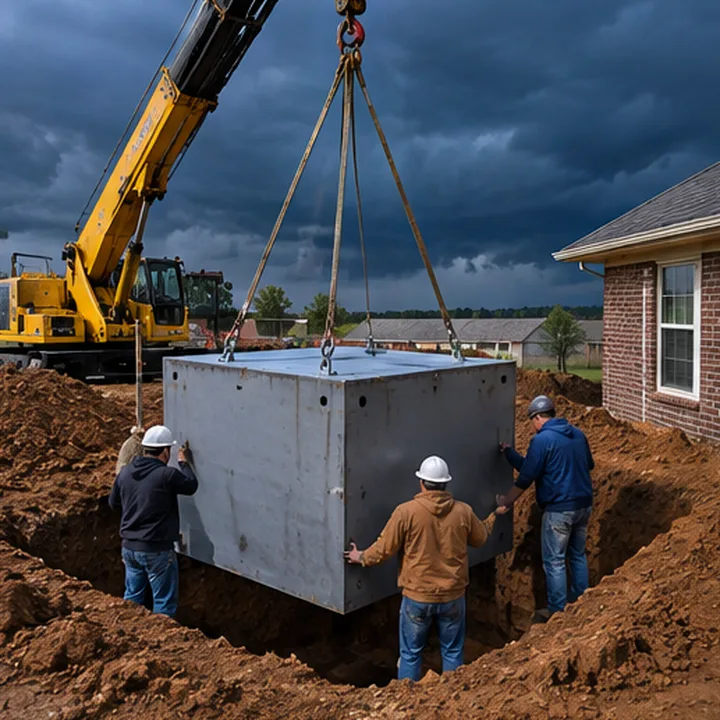
In-Ground Storm Shelter Installation
An in-ground storm shelter puts a steel or concrete room below the surface so a family has a place to go when a tornado warning sounds.
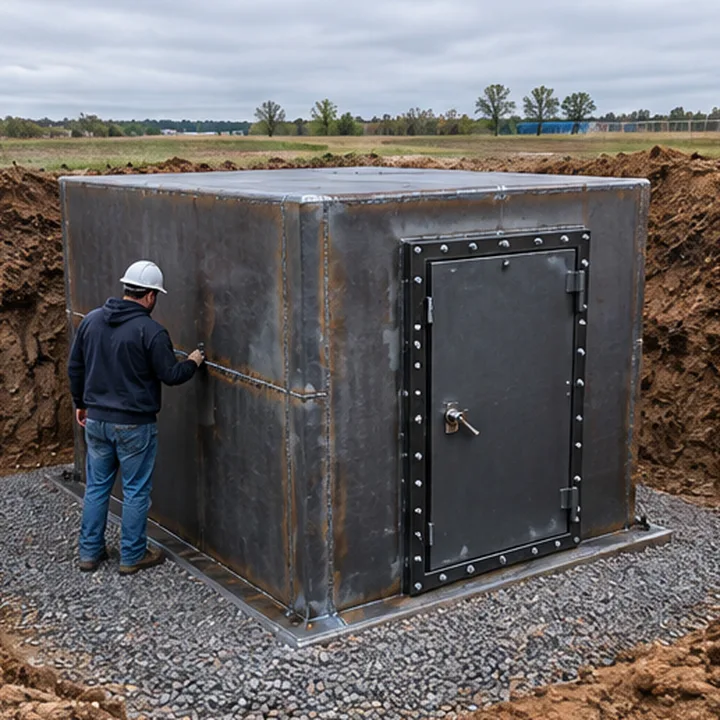
Steel In-Ground Storm Shelters
Steel in-ground shelters are factory-built rooms made of heavy plate, delivered whole and set into the ground in a day.
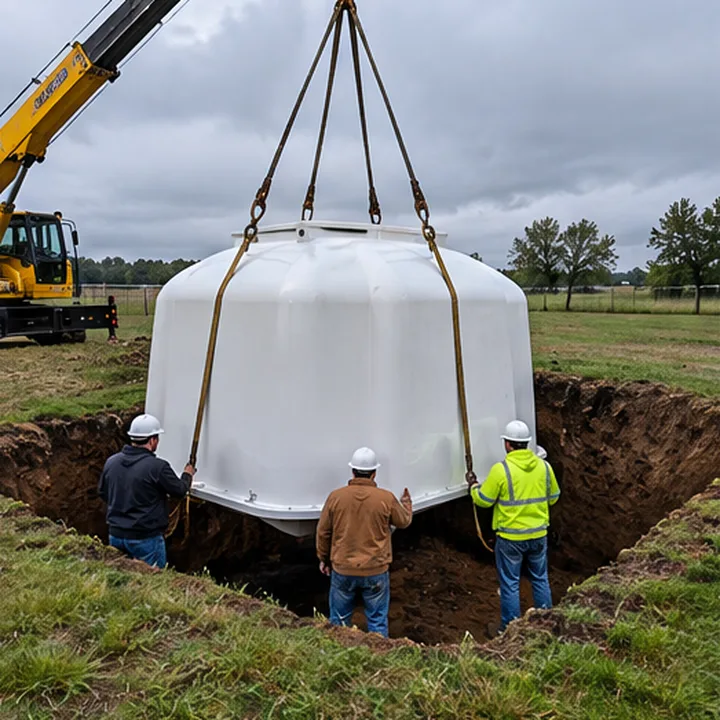
Fiberglass In-Ground Storm Shelters
Fiberglass shelters are light, will not rust and are common where the soil is damp or the water table is high.
Ready to plan your shelter?
Tell us where you live and who is in your household. We will walk the site, explain the options in plain words and put the plan in writing.