
Take Cover Clock
Enter the distance, the stairs and how your household moves, and see your walk time against a short, a typical and a long warning.
Can you reach the shelter before the storm?
How does your household move?
Saved. It will travel with the request form below.
- Getting moving 0
- Walking 0
- Stairs 0
- Door 0
Real warnings vary and can be much shorter than the examples. Practice the walk and time it yourself.
Three steps
Enter the distance from the farthest room to the shelter door.
Choose how your household moves and count the steps.
See the total time, and where it falls against three warning lengths.
Warning times vary a great deal, and they can be very short. A shelter you can reach in a minute is worth more than one that takes five.
About this tool
What speeds does it use?
About 4 feet per second for a brisk walk, 2.8 when carrying a child or a pet, 2 for a slow walker and 1.2 for a walker, cane or wheelchair, plus 1.2 seconds per stair and 8 seconds to open the door.
What are the warning lengths?
Three minutes for a short warning, eight for a typical one and thirteen for a long one. Real warnings vary and can be shorter.
Does it replace a site walk?
No. It is a planning aid. A site walk checks the ground, the house, access and utilities.
Services that use these numbers
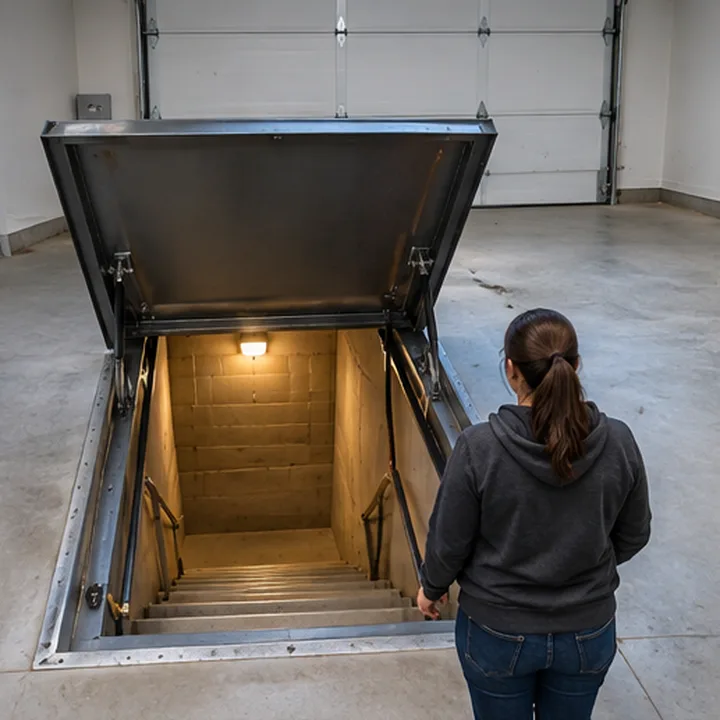
Garage Floor Storm Shelter
A garage floor shelter hides in the slab, so the family is a few steps away from safety without going out into the storm.
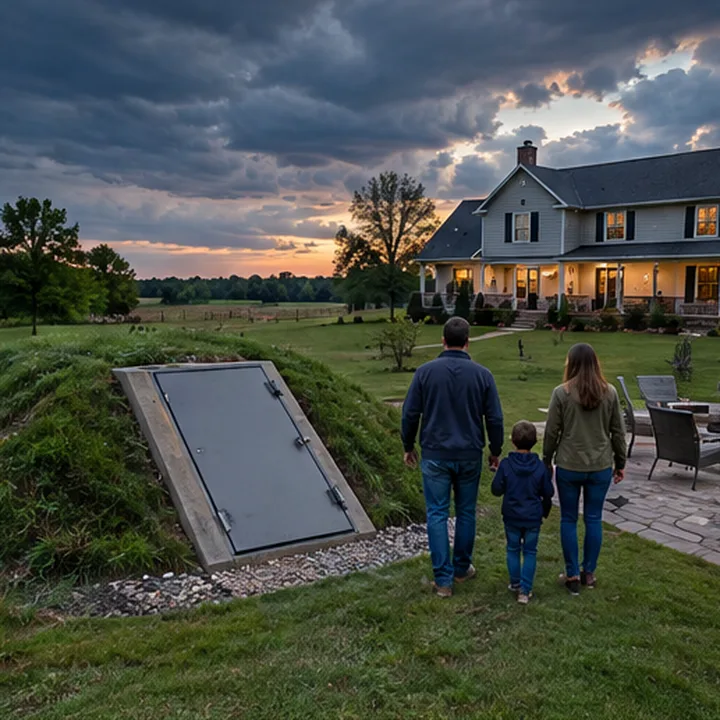
Backyard Underground Storm Shelter
A backyard underground shelter is a self-contained room in the yard, a short walk from the house, with a sloped or hatch door.
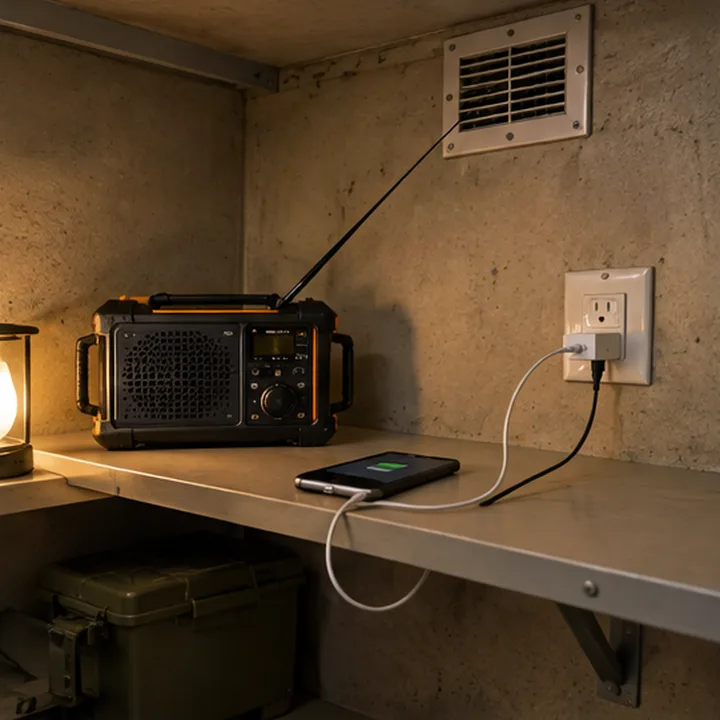
Shelter Communications and Weather Alert Setup
A weather radio and a charging point keep you informed inside a shelter, and a plan for alerts helps you get there in time.
Ready to plan your shelter?
Tell us where you live and who is in your household. We will walk the site, explain the options in plain words and put the plan in writing.